Source Biodegradable Artificial Snow for Indoor Outdoors Events
Compare 30 listings for biodegradable artificial snow from suppliers in Guangdong. Buyers can evaluate resin and polyester options, sizes from granules to flakes, and customization availability for Christmas and winter decoration projects.
Key considerations
Products List






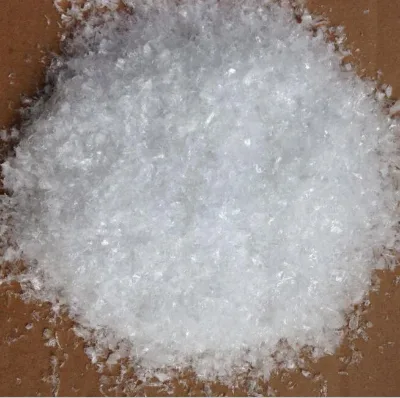
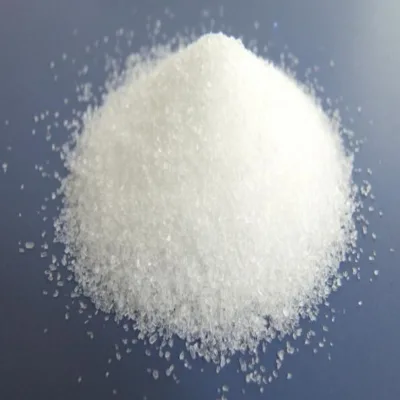
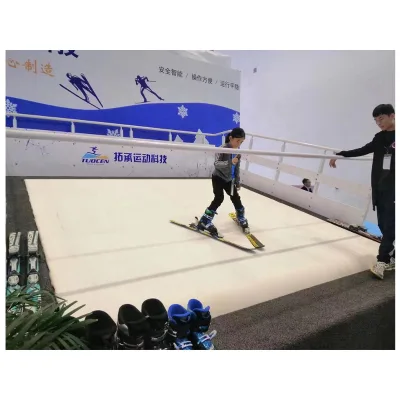
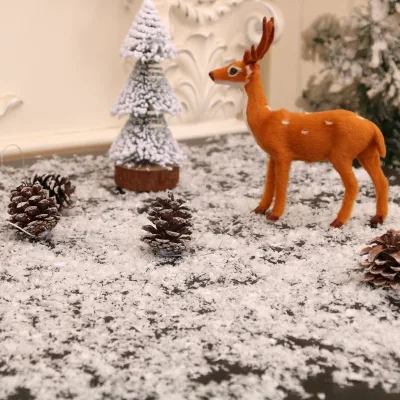






Comprehensive Sourcing Guide
Strategic Sourcing Guide for Biodegradable Artificial Snow Procurement
Understanding Product Definitions and Material Composition
The procurement of biodegradable artificial snow requires a precise understanding of the distinction between traditional synthetic polymers and emerging eco-friendly alternatives. In the current market, "artificial snow" is often categorized by its molecular structure and intended end-of-life behavior. While many standard products utilize a carbon chain polymer base, which typically implies a non-biodegradable resin composition, the specific demand for biodegradable variants necessitates a deeper dive into material science. The supplied data indicates that standard artificial snow products are frequently composed of resin with a molecular principal chain of carbon chain polymer. However, the specific keyword "biodegradable" suggests a search for materials that deviate from this standard carbon chain structure or utilize specific additives to facilitate decomposition.
Buyers must verify the exact material composition of the product they intend to purchase. The observed product attributes list materials such as "Resin" and "Polyester," which are common in the industry. A polyester-based artificial snow, for instance, offers a different tactile profile compared to resin-based granules. When sourcing biodegradable options, the procurement team must explicitly confirm whether the "Resin" mentioned in product listings is a standard petroleum-based polymer or a bio-based alternative. The absence of explicit "biodegradable" certification in the provided high-confidence facts for the resin-based items (Model AS301, IS30100) highlights a critical verification step. Buyers should not assume that a product labeled as "Magic Snow" or "Fake Snow" possesses biodegradable properties unless the material specification explicitly states a bio-based origin or provides a decomposition timeline. The distinction is vital because the term "biodegradable" is often used loosely in marketing, whereas the underlying material science determines the actual environmental impact.
Technical Specifications and Physical Attributes
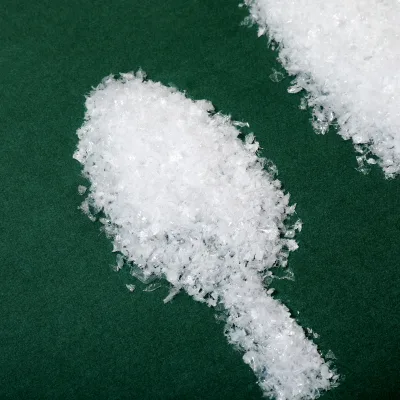
When evaluating artificial snow for procurement, technical specifications serve as the primary filter for suitability. The market offers a diverse range of physical forms, from granular textures to sheet-like structures. The provided data reveals that standard artificial snow is available in "Granule" form with specific size ranges, such as 1~8mm. This granular specification is crucial for applications requiring a natural, loose snow appearance, such as landscaping or large-scale event staging. Conversely, other product models, such as those designated with model numbers like S2002 or S805, offer variations in weight and packaging, with options ranging from 100g to 250g per bag, or even 16 oz per poly bag.
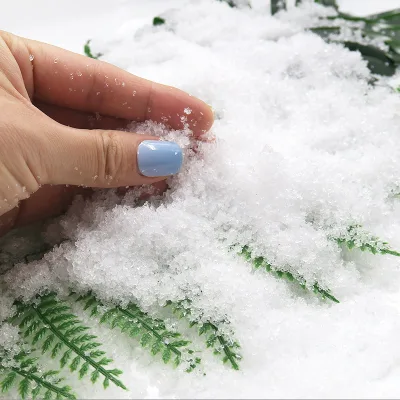
The physical dimensions and texture are equally important. Some products are described with specific dimensions, such as a length of 4.5 meters and a width of 20 inches, with a thickness of 1 inch, indicating a sheet or roll format rather than loose granules. The "Hand Feel" is another critical technical attribute, with some products noted as "Soft," which is essential for applications involving direct contact, such as children's play areas or indoor decoration. The "Style" is often listed as "Plain," suggesting a uniform white or colorful appearance, while the "Artwork" description might refer to the visual effect, such as "Snow in Seconds" or "Snow Like Wadding."
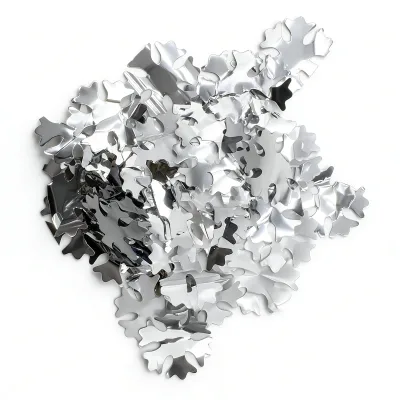
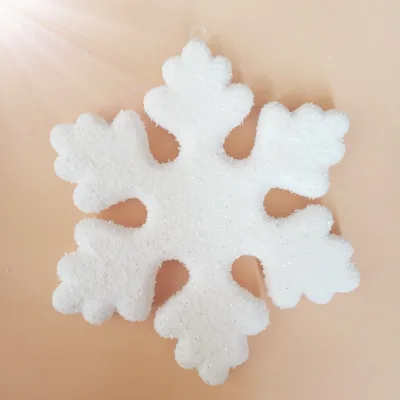
Buyers must align these technical specifications with their specific use cases. For indoor applications, the granule size and softness are paramount to ensure safety and aesthetic appeal. For outdoor use, the durability and resistance to wind or moisture become the primary technical concerns. The data indicates that products are suitable for both "Indoor" and "Outdoor" applications, but the specific material composition (Resin vs. Polyester) will dictate the longevity and weather resistance. A polyester-based snowflake might offer better structural integrity for hanging decorations, whereas a resin-based granule might be better suited for ground cover. The "Size" attribute also varies, with some products explicitly labeled as "Biodegradable Artificial Snowflakes," suggesting a specific shape and size profile distinct from the granular forms.
Compliance, Certification, and Environmental Verification
The term "biodegradable" carries significant regulatory and environmental weight, making compliance verification a non-negotiable step in the sourcing process. While the provided product facts mention "Biodegradable Artificial Snowflakes" as a size specification, they do not explicitly confirm the certification status or the specific standards met by these products. In the absence of explicit certification data in the supply list, buyers must treat the "biodegradable" claim as an observation that requires independent verification rather than a guaranteed attribute of every listed item.
Procurement teams should demand third-party test results or certifications that align with recognized international standards for biodegradability. Common standards include ASTM D6400, EN 13432, or ISO 14855, which define the conditions under which a material must decompose within a specific timeframe. Without these specific certifications, a product labeled as biodegradable may only decompose under industrial composting conditions that are not available in the buyer's disposal infrastructure. The "Standard" attribute in the provided data lists "20kg" or "100g," which refers to packaging weight rather than a material compliance standard. This distinction is critical; buyers must not confuse packaging standards with material environmental standards.
Furthermore, the "Supply Type" is noted as "Make-to-Order" for some items, which implies that the production process can be tailored. This offers an opportunity for buyers to request specific material formulations that meet their environmental goals. However, the "Customized" attribute is listed as both "Non-Customized" and "Customized" across different product lines, indicating that not all suppliers offer the flexibility to alter the material composition. Buyers seeking truly biodegradable solutions must identify suppliers who explicitly offer customization of the molecular principal chain or material blend to ensure the final product meets the required environmental criteria. The "Sample" attribute being "Free" is a valuable resource for testing, allowing buyers to physically inspect the material and potentially conduct preliminary decomposition tests before committing to a large order.
Cost Drivers and Pricing Dynamics
The pricing of artificial snow is influenced by a complex interplay of material costs, production complexity, and order volume. The observed price range in the market spans from $0.08 to $8.80 USD, a significant variance that reflects differences in product type, material quality, and packaging. The "Min. Order" (MOQ) is a primary driver of unit cost, with observed ranges from 1 unit to 5000 units. For biodegradable materials, which often involve more complex manufacturing processes or higher raw material costs than standard synthetic resins, the price point is likely to be at the higher end of this spectrum.
The "prod_packing" specifications also impact cost. Products packaged in "Nylon Weave Bag and 1-Layer Plastic Sheet" or "96 Bags Into a CTN" involve different logistics and material costs compared to simpler poly bag packaging. The weight of the product, ranging from 100g to 250g per bag, directly correlates with the material usage and shipping weight, which in turn affects the total landed cost. Buyers should note that the "Min. Order" for some specific biodegradable or specialized items might be higher, such as the 5000kg minimum order observed for certain resin-based products, which could be a barrier for smaller buyers.
Lead time is another cost factor. The observed "Delivery" time of 7~15 days suggests a relatively short production cycle, but this can vary based on the "Make-to-Order" nature of the supply. Customized biodegradable formulations may require longer lead times for material sourcing and production setup. The "Location" of the supplier, primarily in Guangdong, China, and Dongguan, Guangdong, indicates a concentration of manufacturing capabilities in this region, which can influence shipping costs and import duties depending on the buyer's location. Buyers should calculate the total cost of ownership, including shipping, duties, and potential inventory holding costs, rather than focusing solely on the unit price.
Typical Applications and Usage Scenarios
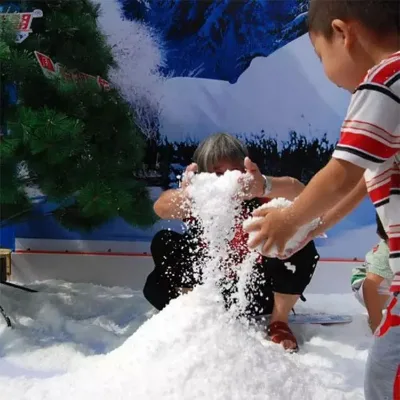
The versatility of artificial snow makes it suitable for a wide array of applications, ranging from commercial events to residential decoration. The "Application" attribute explicitly lists "Indoor" and "Outdoor" use, confirming its adaptability to various environments. The "Use" attribute further specifies "Christmas Day" and "Winter Decoration," highlighting its primary seasonal relevance. However, the potential applications extend beyond the holiday season, including theatrical productions, film sets, and retail displays that require a winter aesthetic year-round.
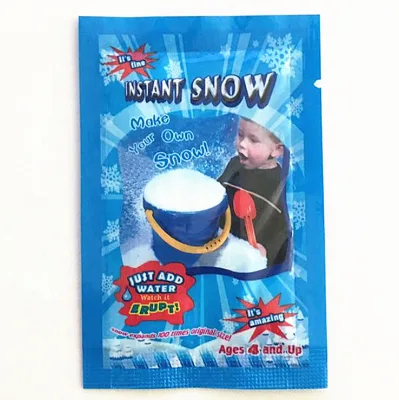
The "Style" being "Plain" and the "Color" being "White" or "Colorful" allows for customization to match specific design themes. For indoor applications, the "Soft" hand feel is a critical factor, ensuring the product is safe for handling and does not create a mess. The "DIY" attribute being "Yes" for some products suggests that these items are designed for end-user assembly or customization, which is ideal for retail customers or event planners who want to create unique displays. The "Artwork" descriptions, such as "Snow in Seconds" or "White Snow," indicate products that are designed for quick deployment and immediate visual impact.
For outdoor applications, the durability of the material becomes the primary concern. While the data confirms suitability for outdoor use, the specific material composition (Resin vs. Polyester) will determine how well the product withstands wind, rain, and UV exposure. Biodegradable options are particularly attractive for outdoor events where waste management is a concern, as they can be composted or disposed of more easily than traditional synthetic snow. The "Size" variations, from granules to snowflakes, allow for different aesthetic effects, such as ground cover versus hanging decorations. Buyers should consider the specific environmental conditions of their application site when selecting the appropriate product type and material.
Supplier Evaluation and Quality Control Protocols
Selecting the right supplier is critical for ensuring the quality and reliability of biodegradable artificial snow. The "Location" data points to a concentration of suppliers in Guangdong and Dongguan, China, which are major manufacturing hubs. Buyers should evaluate suppliers based on their ability to provide consistent quality, adherence to environmental claims, and responsiveness to customization requests. The "Customization" attribute being "Available" for some products indicates that suppliers are willing to work with buyers to meet specific requirements, but this capability must be verified through direct communication.
Quality control should be a central part of the procurement process. Buyers should request detailed product specifications, including material composition, weight, and dimensions, to ensure they match the requirements. The "Sample" availability is a key tool for quality assessment, allowing buyers to physically inspect the product for texture, color, and packaging integrity. For biodegradable products, buyers should also request documentation regarding the decomposition process and any relevant test results. The "Supply Type" being "Make-to-Order" suggests that suppliers can tailor production to specific quality standards, but this requires clear communication and potentially longer lead times.
The "Standard" and "prod_model" attributes provide a framework for product identification, but buyers should not rely solely on these labels. Instead, they should conduct a thorough review of the supplier's quality management systems and certifications. The "Weight" variations (100g, 130g, 250g) and "prod_packing" details (e.g., 96 bags into a carton) should be verified to ensure consistency across batches. Buyers should also consider the supplier's track record in delivering on time and their ability to handle large orders, as the "Min. Order" can be as high as 5000kg for some products.
Long-Term Procurement and Sustainability Considerations
Sourcing biodegradable artificial snow is not just a transactional decision but a strategic move towards sustainability. The long-term implications of this choice include reduced environmental impact, alignment with corporate social responsibility goals, and potential cost savings in waste management. However, the success of this strategy depends on the availability of reliable biodegradable materials and the infrastructure to dispose of them properly. Buyers should consider the lifecycle of the product, from production to disposal, and ensure that the "biodegradable" claim is backed by robust evidence.
The "Customized" and "DIY" attributes offer opportunities for buyers to innovate and create unique products that stand out in the market. By working with suppliers who offer customization, buyers can develop artificial snow solutions that are not only biodegradable but also tailored to specific brand identities or event themes. The "Sample" availability facilitates this innovation process, allowing buyers to test and refine their product offerings before scaling up.
Long-term procurement also involves building strong relationships with suppliers who share the buyer's commitment to sustainability. This includes regular communication about material advancements, environmental regulations, and market trends. The "Make-to-Order" supply type suggests a flexible partnership model, where suppliers can adapt to changing market demands and buyer needs. By focusing on long-term relationships and continuous improvement, buyers can ensure a steady supply of high-quality, biodegradable artificial snow that meets their evolving requirements.
FAQs
What materials are used for biodegradable artificial snow?
Products typically use resin or polyester, though resin often implies a carbon chain polymer. Buyers must verify if the resin is bio-based to ensure true biodegradability, as standard listings may not specify this critical detail.
Can I find biodegradable artificial snow with free samples?
Yes, some suppliers offer free samples for testing before purchase. This allows buyers to verify the hand feel and physical properties like softness or granule size before committing to a larger order volume.
How long does delivery take for these products?
Delivery typically takes between 7 to 15 days from the supplier location. This lead time applies to standard orders, though customized biodegradable formulations may require additional processing time depending on the manufacturer.
What are the minimum order quantities for artificial snow?
Minimum orders vary significantly, ranging from 1 unit up to 5000 kilograms depending on the specific product model. Some granular resin products require a 5000kg minimum, while smaller bagged options have lower thresholds.
Which packaging options are available for these snow products?
Packaging includes nylon weave bags with plastic sheets or poly bags packed into cartons. Specific configurations like 96 bags per carton or 12 bags per carton are common for different weight variants.
Where are the manufacturers of artificial snow located?
Manufacturers are primarily located in Guangdong and Dongguan, China. These regions serve as major hubs for producing various types of artificial snow decorations and materials for both indoor and outdoor applications.